CUET Chemistry: ChemistryAlcohols, Phenols & Ethers. Free, no login required.

Q2:

2026: 29 May Shift 1

Alcohols, Phenols & Ethers

Easy

The IUPAC name of the product formed by the reaction of propanone with methylmagnesium bromide followed by hydrolysis is

Answer options
Option 3
Correct Answer
Explanation for 2026: 29 May Shift 1 CHE question 2

Q3:

2026: 29 May Shift 1

Alcohols, Phenols & Ethers

Medium

Arrange the following compounds in increasing order of acidity.

(A) o-Nitrophenol

(B) p-Nitrophenol

(C) m-Nitrophenol

(D) Phenol

Answer options
Option 3
Correct Answer
Explanation for 2026: 29 May Shift 1 CHE question 3

Q4:

2026: 29 May Shift 1

Alcohols, Phenols & Ethers

Easy

Which of the following reactions is not given by phenols ?

Answer options
Option 3
Correct Answer
Explanation for 2026: 29 May Shift 1 CHE question 4

Q6:

2026: 26 May Shift 2

Alcohols, Phenols & Ethers

Easy

Match the LIST-I with LIST-II.

LIST-I (Structures)LIST-II (Name of the compounds)
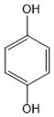
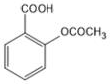
A.FigureI.Resorcinol
B.FigureII.Quinol
C.FigureIII.Aspirin
D.FigureIV.Catechol
Answer options
Option 2
Correct Answer
Explanation for 2026: 26 May Shift 2 CHE question 6

Q7:

2026: 26 May Shift 2

Alcohols, Phenols & Ethers

Easy

Which of the following alcohols undergoes dehydration at a faster rate ?

Answer options
Option 1
Correct Answer
Explanation for 2026: 26 May Shift 2 CHE question 7

Q8:

2026: 26 May Shift 2

Alcohols, Phenols & Ethers

Easy

Match the LIST-I with LIST-II.

LIST-I Compound/useLIST-II Common Names
A.Carbolic acidI.Aspirin
B.Wood SpiritII.Diethyl ether
C.AnaestheticIII.Methanol
D.Acetylsalicylic AcidIV.Phenol
Answer options
Option 2
Correct Answer
Explanation for 2026: 26 May Shift 2 CHE question 8

Q9:

2026: 26 May Shift 2

Alcohols, Phenols & Ethers

Easy

Bromination of anisole in the presence of ethanoic acid does not require the Lewis acid because

Answer options
Option 3
Correct Answer
Explanation for 2026: 26 May Shift 2 CHE question 9

Q10:

2026: 26 May Shift 1

Alcohols, Phenols & Ethers

Easy

Which of the following methods are used for the synthesis of an alcohol?

(A) Hydroboration–oxidation of alkenes

(B) By reduction of aldehydes and ketones

(C) By acid catalysed hydration of alkenes

(D) Hydration of alkyne in the presence of Hg2+^{2+}/H+^+

Answer options

Q12:

2026: 26 May Shift 1

Alcohols, Phenols & Ethers

Medium

Arrange the following in decreasing order of their acidic strength?

(A) Phenol

(B) o-Nitrophenol

(C) m-Nitrophenol

(D) p-Nitrophenol

Answer options

Q13:

2026: 26 May Shift 1

Alcohols, Phenols & Ethers

Medium

Which of the following products is not possible by the reaction of corresponding sodium alkoxide with methyl chloride in Williamson's synthesis?

Answer options

Q17:

2026: 25 May Shift 2

Alcohols, Phenols & Ethers

Easy

Match List-I with List-II

List-IList-II
Common NameIUPAC Name
(A) m-cresol(I) Benzene- 1,2- diol
(B) Resorcinol(II) 3-Methylphenol
(C) Catechol(III) Benzene- 1,4- diol
(D) Hydroquinone(IV) Benzene- 1,3- diol
Answer options

Q18:

2026: 25 May Shift 2

Alcohols, Phenols & Ethers

Easy

The product(s) formed when phenol reacts with Br2Br_2 in CS2CS_2 at low temperature is

Answer options

Q19:

2026: 25 May Shift 2

Alcohols, Phenols & Ethers

Medium

Which of the following gives a positive FeCl3FeCl_3 test ?

(A) Phenol

(B) o-Cresol

(C) Quinol

(D) Ethanol

Answer options

Q20:

2026: 25 May Shift 2

Alcohols, Phenols & Ethers

Medium

Arrange the following compounds in increasing order of their acid strength:

(A) 4-methylphenol

(B) 3-nitrophenol

(C) 2,4,6-trinitrophenol

(D) Phenol

Answer options

Q21:

2026: 25 May Shift 1

Alcohols, Phenols & Ethers

Easy

The correct IUPAC name of the compound CH2=CH−CH2OH\mathrm{CH_2{=}CH{-}CH_2OH} is

Answer options

Q23:

2026: 25 May Shift 1

Alcohols, Phenols & Ethers

Easy

Match the LIST-I with LIST-II.

LIST-I Conversion ofLIST-II Reagent used
A.phenol to salicylic acidI.Zn dust
B.alcohol to alkeneII.Conc. HNO3\mathrm{HNO_3}
C.phenol to picric acidIII.Conc. H2SO4\mathrm{H_2SO_4}
D.phenol to benzeneIV.NaOH, CO2\mathrm{CO_2}, H+\mathrm{H^+}
Answer options

Q24:

2026: 25 May Shift 1

Alcohols, Phenols & Ethers

Medium

What is the IUPAC name of the organic compound (X) formed in the following reaction

CH3COCH3→(ii) H2O, H+(i) C2H5MgBr, Dry ether(X)\mathrm{CH_3COCH_3} \xrightarrow[\text{(ii) } \mathrm{H_2O,\ H^+}]{\text{(i) } \mathrm{C_2H_5MgBr}, \text{ Dry ether}} \mathrm{(X)}

Answer options

Q25:

2026: 25 May Shift 1

Alcohols, Phenols & Ethers

Medium

Arrange the following compounds in increasing order of boiling points.

A. Propan-1-ol

B. Butan-1-ol

C. Butan-2-ol

D. Pentan-1-ol

Answer options

Q26:

2026: 24 May Shift 1

Alcohols, Phenols & Ethers

Easy

Alcohols, Phenols and Ethers

Alcohols and phenols are formed when a hydrogen atom in a hydrocarbon, aliphatic and aromatic respectively, is replaced by –OH group. These classes of compounds find wide applications in industry as well as in day-to-day life. For instance, have you ever noticed that ordinary spirit used for polishing wooden furniture is chiefly a compound containing hydroxyl group, ethanol. The sugar we eat, the cotton used for fabrics, the paper we use for writing, are all made up of compounds containing –OH groups. The common name of an alcohol is derived from the common name of the alkyl group and adding the word alcohol to it. For example, CH3OHCH_3OH is methyl alcohol. The simplest hydroxy derivative of benzene is phenol. It is its common name and also an accepted IUPAC name. As structure of phenol involves a benzene ring, in its substituted compounds the terms ortho (1,2-disubstituted), meta (1,3-disubstituted) and para (1,4-disubstituted) are often used in the common names.

In ethers, the four electron pairs, i.e., the two bond pairs and two lone pairs of electrons on oxygen are arranged approximately in a tetrahedral arrangement. The bond angle is slightly greater than the tetrahedral angle due to the repulsive interaction between the two bulky (–R) groups.

What is the common name for the following structure given below?
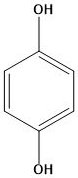
Figure

Answer options

Q27:

2026: 24 May Shift 1

Alcohols, Phenols & Ethers

Easy

Alcohols, Phenols and Ethers

Alcohols and phenols are formed when a hydrogen atom in a hydrocarbon, aliphatic and aromatic respectively, is replaced by –OH group. These classes of compounds find wide applications in industry as well as in day-to-day life. For instance, have you ever noticed that ordinary spirit used for polishing wooden furniture is chiefly a compound containing hydroxyl group, ethanol. The sugar we eat, the cotton used for fabrics, the paper we use for writing, are all made up of compounds containing –OH groups. The common name of an alcohol is derived from the common name of the alkyl group and adding the word alcohol to it. For example, CH3OHCH_3OH is methyl alcohol. The simplest hydroxy derivative of benzene is phenol. It is its common name and also an accepted IUPAC name. As structure of phenol involves a benzene ring, in its substituted compounds the terms ortho (1,2-disubstituted), meta (1,3-disubstituted) and para (1,4-disubstituted) are often used in the common names.

In ethers, the four electron pairs, i.e., the two bond pairs and two lone pairs of electrons on oxygen are arranged approximately in a tetrahedral arrangement. The bond angle is slightly greater than the tetrahedral angle due to the repulsive interaction between the two bulky (–R) groups.

The catalyst involved in the production of methanol through hydrogenation of carbon monoxide is

Answer options

Q28:

2026: 24 May Shift 1

Alcohols, Phenols & Ethers

Medium

Alcohols, Phenols and Ethers

Alcohols and phenols are formed when a hydrogen atom in a hydrocarbon, aliphatic and aromatic respectively, is replaced by –OH group. These classes of compounds find wide applications in industry as well as in day-to-day life. For instance, have you ever noticed that ordinary spirit used for polishing wooden furniture is chiefly a compound containing hydroxyl group, ethanol. The sugar we eat, the cotton used for fabrics, the paper we use for writing, are all made up of compounds containing –OH groups. The common name of an alcohol is derived from the common name of the alkyl group and adding the word alcohol to it. For example, CH3OHCH_3OH is methyl alcohol. The simplest hydroxy derivative of benzene is phenol. It is its common name and also an accepted IUPAC name. As structure of phenol involves a benzene ring, in its substituted compounds the terms ortho (1,2-disubstituted), meta (1,3-disubstituted) and para (1,4-disubstituted) are often used in the common names.

In ethers, the four electron pairs, i.e., the two bond pairs and two lone pairs of electrons on oxygen are arranged approximately in a tetrahedral arrangement. The bond angle is slightly greater than the tetrahedral angle due to the repulsive interaction between the two bulky (–R) groups.

Consider the following chemical reaction and identify the intermediate involved in the reaction.
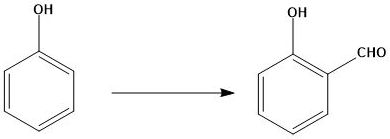
Figure

Answer options

Q29:

2026: 24 May Shift 1

Alcohols, Phenols & Ethers

Easy

Alcohols, Phenols and Ethers

Alcohols and phenols are formed when a hydrogen atom in a hydrocarbon, aliphatic and aromatic respectively, is replaced by –OH group. These classes of compounds find wide applications in industry as well as in day-to-day life. For instance, have you ever noticed that ordinary spirit used for polishing wooden furniture is chiefly a compound containing hydroxyl group, ethanol. The sugar we eat, the cotton used for fabrics, the paper we use for writing, are all made up of compounds containing –OH groups. The common name of an alcohol is derived from the common name of the alkyl group and adding the word alcohol to it. For example, CH3OHCH_3OH is methyl alcohol. The simplest hydroxy derivative of benzene is phenol. It is its common name and also an accepted IUPAC name. As structure of phenol involves a benzene ring, in its substituted compounds the terms ortho (1,2-disubstituted), meta (1,3-disubstituted) and para (1,4-disubstituted) are often used in the common names.

In ethers, the four electron pairs, i.e., the two bond pairs and two lone pairs of electrons on oxygen are arranged approximately in a tetrahedral arrangement. The bond angle is slightly greater than the tetrahedral angle due to the repulsive interaction between the two bulky (–R) groups.

Consider the following chemical reaction and identify the final product(s)
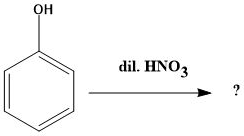
Figure

The final product(s) of the above reaction is

Answer options

Q30:

2026: 24 May Shift 1

Alcohols, Phenols & Ethers

Easy

Alcohols, Phenols and Ethers

Alcohols and phenols are formed when a hydrogen atom in a hydrocarbon, aliphatic and aromatic respectively, is replaced by –OH group. These classes of compounds find wide applications in industry as well as in day-to-day life. For instance, have you ever noticed that ordinary spirit used for polishing wooden furniture is chiefly a compound containing hydroxyl group, ethanol. The sugar we eat, the cotton used for fabrics, the paper we use for writing, are all made up of compounds containing –OH groups. The common name of an alcohol is derived from the common name of the alkyl group and adding the word alcohol to it. For example, CH3OHCH_3OH is methyl alcohol. The simplest hydroxy derivative of benzene is phenol. It is its common name and also an accepted IUPAC name. As structure of phenol involves a benzene ring, in its substituted compounds the terms ortho (1,2-disubstituted), meta (1,3-disubstituted) and para (1,4-disubstituted) are often used in the common names.

In ethers, the four electron pairs, i.e., the two bond pairs and two lone pairs of electrons on oxygen are arranged approximately in a tetrahedral arrangement. The bond angle is slightly greater than the tetrahedral angle due to the repulsive interaction between the two bulky (–R) groups.

The final product for the following reaction is

CH3CH2OH→573KCu?CH_3CH_2OH \xrightarrow[573K]{Cu} ?

Answer options