
The electric field in a region is given by where N/C. What is the electric flux of this field through a rectangular surface of area 0.02 m parallel to plane ?
The electric field in a region is given by where N/C. What is the electric flux of this field through a rectangular surface of area 0.02 m parallel to plane ?
Solution
✅ Correct Option: 2
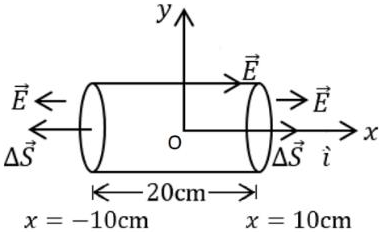
A surface parallel to the y-z plane has its area vector along , so only the component of the field contributes to the flux.
Option 3: this comes from using the component , which lies in the plane of the surface and gives no flux.
Option 1: this uses the full magnitude instead of the component normal to the surface.
Related questions:
2025: 14 May Shift 1
2025: 21 May Shift 2
2025: 3 June Shift 2