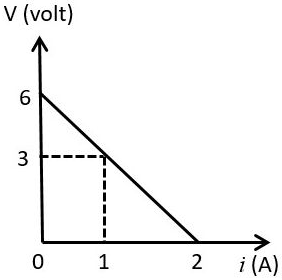
At room temperature (C) the resistance of a heating element is . The temperature of the element at which resistance becomes is : ( Given that the temperature coefficient of the material of the resistor is .)
At room temperature (C) the resistance of a heating element is . The temperature of the element at which resistance becomes is : ( Given that the temperature coefficient of the material of the resistor is .)
Solution
✅ Correct Option: 1
Resistance varies with temperature as , where is the resistance at .
Option 2: this is only the rise in temperature . The starting temperature of C must be added.
Option 4: 1500 K is the same size of rise written in kelvin, but the final temperature is C, not 1500 K.
Related questions:
2025: 3 June Shift 1
2026: 12 May Shift 2