CUET Chemistry: ChemistryHaloalkanes & Haloarenes. Free, no login required.

Q1:

2026: 29 May Shift 1

Haloalkanes & Haloarenes

Easy

Match List-I with List-II

List-IList-II
Reagents and SubstratesName Reaction
(A) Alkyl chloride + NaI + dry acetone(I) Wurtz reaction
(B) Alkyl halide + Na(II) Friedel-Crafts reaction
(C) Aryl halide + methyl chloride + anhyd. AlCl3_3(III) Finkelstein reaction
(D) Aryl halide + Na(IV) Fittig reaction
Answer options
Option 1
Correct Answer
Explanation for 2026: 29 May Shift 1 CHE question 1

Q2:

2026: 29 May Shift 1

Haloalkanes & Haloarenes

Medium

Choose the correct statements for Markovnikov's rule.

(A) An alkene is converted to corresponding alkyl halide by reaction with HCl, HBr and HI.

(B) But-1-ene on reaction with HCl gives 2-chlorobutane as major product.

(C) But-1-ene on reaction with HCl gives 1-chlorobutane as major product.

(D) Addition of hydrogen takes place to the doubly bonded carbon atom which is more substituted.

Answer options
Option 1
Correct Answer
Explanation for 2026: 29 May Shift 1 CHE question 2

Q3:

2026: 29 May Shift 1

Haloalkanes & Haloarenes

Medium

Consider the following reactions.

CH3Cl→KNO2Product A\mathrm{CH_3Cl} \xrightarrow{\mathrm{KNO_2}} \text{Product A}

CH3Cl→AgNO2Product B\mathrm{CH_3Cl} \xrightarrow{\mathrm{AgNO_2}} \text{Product B}

In the above mentioned reactions, the reaction of chloromethane with KNO2_2 and AgNO2_2 afford two products: Products A and B, respectively. The Products A and B are:

Answer options
Option 2
Correct Answer
Explanation for 2026: 29 May Shift 1 CHE question 3

Q4:

2026: 26 May Shift 2

Haloalkanes & Haloarenes

Easy

Consider the following alkyl halides. Choose the correct answer from the options given below for the decreasing order of the ease of the nucleophilic substitution reaction.

A. Methyl Bromide

B. Methyl Chloride

C. Methyl Iodide

D. Methyl Fluoride

Answer options
Option 2
Correct Answer
Explanation for 2026: 26 May Shift 2 CHE question 4

Q5:

2026: 26 May Shift 2

Haloalkanes & Haloarenes

Medium

Arrange the following alkyl halides in the order of increasing reactivity towards SN1\mathrm{S_N1} reaction.

A. C6_6H5_5CH2_2Br

B. C6_6H5_5CH(C6_6H5_5)Br

C. C6_6H5_5CH(CH3_3)Br

D. C6_6H5_5C(CH3_3)(C6_6H5_5)Br

Answer options
Option 2
Correct Answer
Explanation for 2026: 26 May Shift 2 CHE question 5

Q6:

2026: 26 May Shift 2

Haloalkanes & Haloarenes

Medium

Hydrolysis of optically active 2-bromobutane results in formation of

A. (+) Butan-2-ol

B. (–) Butan-2-ol

C. but-2-ene

D. but-1-ene

Answer options
Option 1
Correct Answer
Explanation for 2026: 26 May Shift 2 CHE question 6

Q8:

2026: 26 May Shift 2

Haloalkanes & Haloarenes

Easy

Which of the following reactions involves preparation of alkyl fluoride ?

Answer options
Option 3
Correct Answer
Explanation for 2026: 26 May Shift 2 CHE question 8

Q9:

2026: 26 May Shift 1

Haloalkanes & Haloarenes

Easy

The IUPAC name of the compound Figure is:

Answer options
Option 2
Correct Answer
Explanation for 2026: 26 May Shift 1 CHE question 9

Q10:

2026: 26 May Shift 1

Haloalkanes & Haloarenes

Easy

Match List-I with List-II

ReactionName of Reaction
(A) Figure(I) Finkelstein Reaction
(B) CH3−Br+AgF→CH3−F+AgBr\mathrm{CH_3{-}Br + AgF \rightarrow CH_3{-}F + AgBr}(II) Swarts Reaction
(C) CH3−Cl+NaI→CH3−I+NaCl\mathrm{CH_3{-}Cl + NaI \rightarrow CH_3{-}I + NaCl}(III) Fittig Reaction
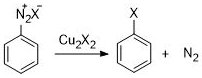
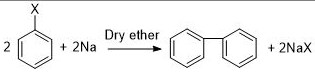
(D) Figure + 2NaX(IV) Sandmeyer's Reaction
Answer options

Q11:

2026: 26 May Shift 1

Haloalkanes & Haloarenes

Easy

Which of the following will give a single monochloride on photochemical chlorination ?

Answer options

Q12:

2026: 26 May Shift 1

Haloalkanes & Haloarenes

Easy

Arrange the following in order of their increasing bond enthalpies?

(A) Methyl Fluoride

(B) Methyl Iodide

(C) Methyl Chloride

(D) Methyl Bromide

Answer options

Q13:

2026: 26 May Shift 1

Haloalkanes & Haloarenes

Easy

Which of the following undergoes fastest nucleophilic substitution reaction?

Answer options

Q14:

2026: 25 May Shift 2

Haloalkanes & Haloarenes

Easy

The reaction of alkyl halides with sodium metal in dry ether is

Answer options

Q15:

2026: 25 May Shift 2

Haloalkanes & Haloarenes

Medium

Which of the following when made to react with Grignard reagent does not form hydrocarbon ?

Answer options

Q16:

2026: 25 May Shift 2

Haloalkanes & Haloarenes

Easy

Which one of the following is solid at room temperature?

Answer options

Q18:

2026: 25 May Shift 2

Haloalkanes & Haloarenes

Easy

The organic halogen compound used for refrigeration and air conditioning purposes is:

Answer options

Q19:

2026: 25 May Shift 2

Haloalkanes & Haloarenes

Easy

A primary alkyl halide would prefer to undergo ____________

Answer options

Q20:

2026: 25 May Shift 1

Haloalkanes & Haloarenes

Medium

Alkyl halide

The reactivity of alkyl halides is influenced by their chemical structure and the reaction conditions, leading to different mechanistic pathways. A chemist was studying the hydrolysis of the different bromo-alkanes (P) CH3Br\mathrm{CH_3Br} (Q) (CH3)2CHBr\mathrm{(CH_3)_2CHBr} and (R) (CH3)3C-Br\mathrm{(CH_3)_3C\text{-}Br}. When reacted at a low concentration of NaOH in aqueous acetone medium, the rate of reaction was found to be P>Q>R. However, when the same reaction was carried out with a high conc. NaOH in purely aqueous solution, the order of reactivity reversed, becoming R>Q>P. Furthermore, the hydrolysis of (R) resulted in the formation of a racemic mixture while (P) led to the inversion of configuration.

Methyl chloride, methyl bromide, ethyl chloride and some chlorofluoromethanes are gases at room temperature. Higher members are liquids or solids. Molecules of organic halogen compounds are generally polar. Due to greater polarity as well as higher molecular mass as compared to the parent hydrocarbon, the intermolecular forces of attraction (dipole-dipole and van der Waals) are stronger in the halogen derivatives. This is the reason , the boiling points of chlorides, bromides and iodides are considerably higher than those of the hydrocarbons of comparable molecular mass.

The attractions get stronger as the molecules get bigger in size and have more electrons. For the same alkyl group, the boiling points of alkyl halides decrease in the order: RI> RBr> RCl> RF. This is because with the increase in size and mass of halogen atom, the magnitude of van der Waal forces increases.

In the first set of conditions (low concentration NaOH in aqueous acetone) the predominant mechanism operating is

Answer options

Q21:

2026: 25 May Shift 1

Haloalkanes & Haloarenes

Medium

Alkyl halide

The reactivity of alkyl halides is influenced by their chemical structure and the reaction conditions, leading to different mechanistic pathways. A chemist was studying the hydrolysis of the different bromo-alkanes (P) CH3Br\mathrm{CH_3Br} (Q) (CH3)2CHBr\mathrm{(CH_3)_2CHBr} and (R) (CH3)3C-Br\mathrm{(CH_3)_3C\text{-}Br}. When reacted at a low concentration of NaOH in aqueous acetone medium, the rate of reaction was found to be P>Q>R. However, when the same reaction was carried out with a high conc. NaOH in purely aqueous solution, the order of reactivity reversed, becoming R>Q>P. Furthermore, the hydrolysis of (R) resulted in the formation of a racemic mixture while (P) led to the inversion of configuration.

Methyl chloride, methyl bromide, ethyl chloride and some chlorofluoromethanes are gases at room temperature. Higher members are liquids or solids. Molecules of organic halogen compounds are generally polar. Due to greater polarity as well as higher molecular mass as compared to the parent hydrocarbon, the intermolecular forces of attraction (dipole-dipole and van der Waals) are stronger in the halogen derivatives. This is the reason , the boiling points of chlorides, bromides and iodides are considerably higher than those of the hydrocarbons of comparable molecular mass.

The attractions get stronger as the molecules get bigger in size and have more electrons. For the same alkyl group, the boiling points of alkyl halides decrease in the order: RI> RBr> RCl> RF. This is because with the increase in size and mass of halogen atom, the magnitude of van der Waal forces increases.

The reversal of reactivity order in high concentration of NaOH in aqueous medium is because the mechanism shifts to

Answer options

Q22:

2026: 25 May Shift 1

Haloalkanes & Haloarenes

Easy

Alkyl halide

The reactivity of alkyl halides is influenced by their chemical structure and the reaction conditions, leading to different mechanistic pathways. A chemist was studying the hydrolysis of the different bromo-alkanes (P) CH3Br\mathrm{CH_3Br} (Q) (CH3)2CHBr\mathrm{(CH_3)_2CHBr} and (R) (CH3)3C-Br\mathrm{(CH_3)_3C\text{-}Br}. When reacted at a low concentration of NaOH in aqueous acetone medium, the rate of reaction was found to be P>Q>R. However, when the same reaction was carried out with a high conc. NaOH in purely aqueous solution, the order of reactivity reversed, becoming R>Q>P. Furthermore, the hydrolysis of (R) resulted in the formation of a racemic mixture while (P) led to the inversion of configuration.

Methyl chloride, methyl bromide, ethyl chloride and some chlorofluoromethanes are gases at room temperature. Higher members are liquids or solids. Molecules of organic halogen compounds are generally polar. Due to greater polarity as well as higher molecular mass as compared to the parent hydrocarbon, the intermolecular forces of attraction (dipole-dipole and van der Waals) are stronger in the halogen derivatives. This is the reason , the boiling points of chlorides, bromides and iodides are considerably higher than those of the hydrocarbons of comparable molecular mass.

The attractions get stronger as the molecules get bigger in size and have more electrons. For the same alkyl group, the boiling points of alkyl halides decrease in the order: RI> RBr> RCl> RF. This is because with the increase in size and mass of halogen atom, the magnitude of van der Waal forces increases.

Why did the hydrolysis of (R) results in racemic mixture

Answer options

Q23:

2026: 25 May Shift 1

Haloalkanes & Haloarenes

Easy

Alkyl halide

The reactivity of alkyl halides is influenced by their chemical structure and the reaction conditions, leading to different mechanistic pathways. A chemist was studying the hydrolysis of the different bromo-alkanes (P) CH3Br\mathrm{CH_3Br} (Q) (CH3)2CHBr\mathrm{(CH_3)_2CHBr} and (R) (CH3)3C-Br\mathrm{(CH_3)_3C\text{-}Br}. When reacted at a low concentration of NaOH in aqueous acetone medium, the rate of reaction was found to be P>Q>R. However, when the same reaction was carried out with a high conc. NaOH in purely aqueous solution, the order of reactivity reversed, becoming R>Q>P. Furthermore, the hydrolysis of (R) resulted in the formation of a racemic mixture while (P) led to the inversion of configuration.

Methyl chloride, methyl bromide, ethyl chloride and some chlorofluoromethanes are gases at room temperature. Higher members are liquids or solids. Molecules of organic halogen compounds are generally polar. Due to greater polarity as well as higher molecular mass as compared to the parent hydrocarbon, the intermolecular forces of attraction (dipole-dipole and van der Waals) are stronger in the halogen derivatives. This is the reason , the boiling points of chlorides, bromides and iodides are considerably higher than those of the hydrocarbons of comparable molecular mass.

The attractions get stronger as the molecules get bigger in size and have more electrons. For the same alkyl group, the boiling points of alkyl halides decrease in the order: RI> RBr> RCl> RF. This is because with the increase in size and mass of halogen atom, the magnitude of van der Waal forces increases.

Which of the following will have highest boiling point?

Answer options

Q24:

2026: 25 May Shift 1

Haloalkanes & Haloarenes

Easy

Alkyl halide

The reactivity of alkyl halides is influenced by their chemical structure and the reaction conditions, leading to different mechanistic pathways. A chemist was studying the hydrolysis of the different bromo-alkanes (P) CH3Br\mathrm{CH_3Br} (Q) (CH3)2CHBr\mathrm{(CH_3)_2CHBr} and (R) (CH3)3C-Br\mathrm{(CH_3)_3C\text{-}Br}. When reacted at a low concentration of NaOH in aqueous acetone medium, the rate of reaction was found to be P>Q>R. However, when the same reaction was carried out with a high conc. NaOH in purely aqueous solution, the order of reactivity reversed, becoming R>Q>P. Furthermore, the hydrolysis of (R) resulted in the formation of a racemic mixture while (P) led to the inversion of configuration.

Methyl chloride, methyl bromide, ethyl chloride and some chlorofluoromethanes are gases at room temperature. Higher members are liquids or solids. Molecules of organic halogen compounds are generally polar. Due to greater polarity as well as higher molecular mass as compared to the parent hydrocarbon, the intermolecular forces of attraction (dipole-dipole and van der Waals) are stronger in the halogen derivatives. This is the reason , the boiling points of chlorides, bromides and iodides are considerably higher than those of the hydrocarbons of comparable molecular mass.

The attractions get stronger as the molecules get bigger in size and have more electrons. For the same alkyl group, the boiling points of alkyl halides decrease in the order: RI> RBr> RCl> RF. This is because with the increase in size and mass of halogen atom, the magnitude of van der Waal forces increases.

Which compound will show the highest boiling point?

Answer options

Q25:

2026: 24 May Shift 1

Haloalkanes & Haloarenes

Easy

2-Bromopentane reacts with alcoholic KOH to form major product as:

Answer options

Q26:

2026: 24 May Shift 1

Haloalkanes & Haloarenes

Medium

Match List-I with List -II

List-IList-II
(Chemical Reactions)(Characteristic Feature )
(A) Substitution nucleophilic unimolecular(I) Anti- Markovnikov's product
(B) Electrophilic addition of HX to unsymmetrical alkene(II) Inversion
(C) Substitution nucelophilic bimolecular(III) Racemization
(D) Hydroboration oxidation(IV) Markovnikov's product
Answer options

Q28:

2026: 24 May Shift 1

Haloalkanes & Haloarenes

Medium

Arrange the following compounds in increasing order towards nucleophilic substitution reaction .

Figure

Figure

Figure

Figure

Answer options

Q29:

2026: 24 May Shift 1

Haloalkanes & Haloarenes

Easy

Which of the following compound is used as paint remover?

Answer options

Q30:

2026: 22 May Shift 2

Haloalkanes & Haloarenes

Easy

Match List-I with List-II

List-IList-II
Structure of Alkyl/Aryl HalideCommon Name
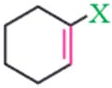
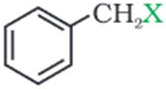
(A) Figure(I) Vinylic halide
(B) Figure(II) Benzylic halide
(C) CH3-CHCl2\mathrm{CH_3\text{-}CHCl_2}(III) Allylic halide
(D) CH2= CH-CH2Cl\mathrm{CH_2{=}\ CH\text{-}CH_2Cl}(IV) Alkylidene halide
Answer options