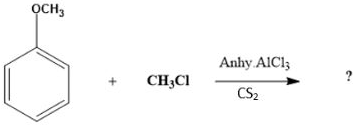
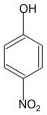
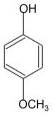
CUET Chemistry: ChemistryAlcohols, Phenols & Ethers. Free, no login required.

Q3:

2025: 23 May Shift 2

Alcohols, Phenols & Ethers

Easy

Ethanoic acid can be converted into ethanol using reagent

Answer options
Option 3
Correct Answer
Explanation for 2025: 23 May Shift 2 CHE question 3

Q4:

2025: 23 May Shift 2

Alcohols, Phenols & Ethers

Easy

Match List-I with List-II

List-IList-II
ReactionPreparation
(A) Kolbe's Reaction(I) Salicylaldehyde
(B) Reimer-Tiemann Reaction(II) Salicylic acid
(C) Williamson synthesis(III) Ethyl methyl ether
(D) Cumene Process(IV) Phenol
Answer options
Option 2
Correct Answer
Explanation for 2025: 23 May Shift 2 CHE question 4

Q5:

2025: 22 May Shift 1

Alcohols, Phenols & Ethers

Easy

Alcohols and phenols are formed when a hydrogen atom in a hydrocarbon, aliphatic and aromatic respectively is replaced by -OH group. These are further classified on the basis of number of hydroxy groups and according to the hybridization of the carbon atom sp2^2 or sp3^3 to which the -OH group is attached. They find applications in industry as well as in day-to-day life. One of the most commercially obtained alcohol also known as wood spirit is obtained by destructive distillation of wood. Both alcohols and phenols are acidic in nature. The acidity of alcohols and phenols vary according to the nature of substituent(s) attached to them. Alcohols and phenols react with carboxylic acids, acid chlorides and acid anhydrides to form esters. Introduction of acetyl group in alcohols and phenols is called acetylation. Phenol undergo electrophilic aromatic substitution reaction because the -OH activates the benzene ring. It undergoes nitration, halogenation and sulphonation reactions.

The final product of the following reaction is:
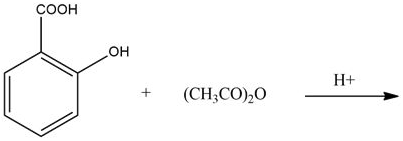
Figure

Answer options
Option 3
Correct Answer
Explanation for 2025: 22 May Shift 1 CHE question 5

Q6:

2025: 22 May Shift 1

Alcohols, Phenols & Ethers

Easy

Alcohols and phenols are formed when a hydrogen atom in a hydrocarbon, aliphatic and aromatic respectively is replaced by -OH group. These are further classified on the basis of number of hydroxy groups and according to the hybridization of the carbon atom sp2^2 or sp3^3 to which the -OH group is attached. They find applications in industry as well as in day-to-day life. One of the most commercially obtained alcohol also known as wood spirit is obtained by destructive distillation of wood. Both alcohols and phenols are acidic in nature. The acidity of alcohols and phenols vary according to the nature of substituent(s) attached to them. Alcohols and phenols react with carboxylic acids, acid chlorides and acid anhydrides to form esters. Introduction of acetyl group in alcohols and phenols is called acetylation. Phenol undergo electrophilic aromatic substitution reaction because the -OH activates the benzene ring. It undergoes nitration, halogenation and sulphonation reactions.

Which compound is also known as 'wood spirit'?

Answer options
Option 2
Correct Answer
Explanation for 2025: 22 May Shift 1 CHE question 6

Q7:

2025: 22 May Shift 1

Alcohols, Phenols & Ethers

Easy

Alcohols and phenols are formed when a hydrogen atom in a hydrocarbon, aliphatic and aromatic respectively is replaced by -OH group. These are further classified on the basis of number of hydroxy groups and according to the hybridization of the carbon atom sp2^2 or sp3^3 to which the -OH group is attached. They find applications in industry as well as in day-to-day life. One of the most commercially obtained alcohol also known as wood spirit is obtained by destructive distillation of wood. Both alcohols and phenols are acidic in nature. The acidity of alcohols and phenols vary according to the nature of substituent(s) attached to them. Alcohols and phenols react with carboxylic acids, acid chlorides and acid anhydrides to form esters. Introduction of acetyl group in alcohols and phenols is called acetylation. Phenol undergo electrophilic aromatic substitution reaction because the -OH activates the benzene ring. It undergoes nitration, halogenation and sulphonation reactions.

Which of the following compound lacks a phenolic group?

Answer options
Option 2
Correct Answer
Explanation for 2025: 22 May Shift 1 CHE question 7

Q8:

2025: 22 May Shift 1

Alcohols, Phenols & Ethers

Easy

Alcohols and phenols are formed when a hydrogen atom in a hydrocarbon, aliphatic and aromatic respectively is replaced by -OH group. These are further classified on the basis of number of hydroxy groups and according to the hybridization of the carbon atom sp2^2 or sp3^3 to which the -OH group is attached. They find applications in industry as well as in day-to-day life. One of the most commercially obtained alcohol also known as wood spirit is obtained by destructive distillation of wood. Both alcohols and phenols are acidic in nature. The acidity of alcohols and phenols vary according to the nature of substituent(s) attached to them. Alcohols and phenols react with carboxylic acids, acid chlorides and acid anhydrides to form esters. Introduction of acetyl group in alcohols and phenols is called acetylation. Phenol undergo electrophilic aromatic substitution reaction because the -OH activates the benzene ring. It undergoes nitration, halogenation and sulphonation reactions.

Identiify the strongest acidic compound

Answer options
Option 2
Correct Answer
Explanation for 2025: 22 May Shift 1 CHE question 8

Q9:

2025: 22 May Shift 1

Alcohols, Phenols & Ethers

Medium

Alcohols and phenols are formed when a hydrogen atom in a hydrocarbon, aliphatic and aromatic respectively is replaced by -OH group. These are further classified on the basis of number of hydroxy groups and according to the hybridization of the carbon atom sp2^2 or sp3^3 to which the -OH group is attached. They find applications in industry as well as in day-to-day life. One of the most commercially obtained alcohol also known as wood spirit is obtained by destructive distillation of wood. Both alcohols and phenols are acidic in nature. The acidity of alcohols and phenols vary according to the nature of substituent(s) attached to them. Alcohols and phenols react with carboxylic acids, acid chlorides and acid anhydrides to form esters. Introduction of acetyl group in alcohols and phenols is called acetylation. Phenol undergo electrophilic aromatic substitution reaction because the -OH activates the benzene ring. It undergoes nitration, halogenation and sulphonation reactions.

When phenol is treated with concentrated sulphuric acid, then it gets converted into phenol-2,4-disulphonic acid (X). On further treatment of X with conc. nitric acid, product Y is formed. Identify Y.

Answer options
Option 2
Correct Answer
Explanation for 2025: 22 May Shift 1 CHE question 9

Q12:

2025: 21 May Shift 2

Alcohols, Phenols & Ethers

Easy

Reaction of phenol with chloroform in the presence of sodium hydroxide gives salicylaldehyde. The reaction is known as

Answer options

Q13:

2025: 21 May Shift 2

Alcohols, Phenols & Ethers

Medium

Match List-I with List-II

List-IList-II
(A) Fermentation of glucose(I) Invertase
(B) Methanol(II) Zymase
(C) Ethanol(III) Poisonous even in small amounts
(D) Fermentation of sucrose(IV) Solvent in paint industry
Answer options

Q14:

2025: 21 May Shift 2

Alcohols, Phenols & Ethers

Easy

The Lucas reagent will react fastest with

Answer options

Q15:

2025: 21 May Shift 1

Alcohols, Phenols & Ethers

Medium

Arrange the following alcohols in increasing order of their boiling points.

(A) Propan-1-ol

(B) Butan-2-ol

(C) Butan-1-ol

(D) Pentan-1-ol

Answer options

Q16:

2025: 21 May Shift 1

Alcohols, Phenols & Ethers

Easy

Alcohol is more soluble in water when compared to alkanes due to the formation of

Answer options

Q17:

2025: 21 May Shift 1

Alcohols, Phenols & Ethers

Easy

In alcohols, C-O-H bond angle is

Answer options

Q18:

2025: 21 May Shift 1

Alcohols, Phenols & Ethers

Medium

Arrange the following compounds in order of their increasing boiling points.

(A) Pentan-1-ol

(B) n-Butane

(C) Pentanal

(D) Ethoxyethane

Answer options

Q19:

2025: 21 May Shift 1

Alcohols, Phenols & Ethers

Easy

Which of the following reactions are given by Phenols?

(A) Nitration

(B) Halogenation

(C) Oxidation

(D) Acetylation

Answer options

Q20:

2025: 19 May Shift 2

Alcohols, Phenols & Ethers

Easy

The major product of Kolbe's reaction is used for the synthesis of a precursor substrate in the preparation of aspirin. The electrophile used in Kolbe's reaction is

Answer options

Q22:

2025: 19 May Shift 2

Alcohols, Phenols & Ethers

Easy

Match List -I with List-II

List-IList-II
Name of CompoundApplication
(A) Neutral Ferric Chloride(I) Anaesthetic
(B) Methanol(II) Detection of Phenolic group
(C) Diethylether(III) Wood Spirit
(D) Acetylsalicylic acid(IV) Analgesic
Answer options

Q23:

2025: 19 May Shift 2

Alcohols, Phenols & Ethers

Medium

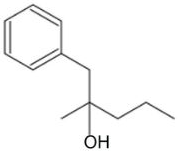
The substrates required for the preparation of the following alcohol are
Figure

Answer options

Q25:

2025: 16 May Shift 1

Alcohols, Phenols & Ethers

Easy

The steam distillation method is used for the separation of 1:1 mixture of p-nitrophenol and o-nitrophenols because

Answer options

Q26:

2025: 16 May Shift 1

Alcohols, Phenols & Ethers

Medium

The cleavage of methyl tertbutyl ether with HI gives

Answer options

Q27:

2025: 16 May Shift 1

Alcohols, Phenols & Ethers

Medium

The correct order of decreasing pKa_a values of the following compounds

(A) Figure

(B) Figure

(C) Figure

(D) Figure

Answer options

Q28:

2025: 15 May Shift 2

Alcohols, Phenols & Ethers

Medium

Pick the reactions which can be used to distinguish between n-propyl alcohol and isopropyl alcohol.

(A) Haloform reaction

(B) Dehydration

(C) Dehydrogenation with Cu/573 K

(D) Oxidation with CrO3CrO_3

Answer options

Q29:

2025: 15 May Shift 2

Alcohols, Phenols & Ethers

Easy

Alcohols are versatile compounds as they can act as both nucleophile and electrophiles. They undergo reactions based on cleavage of O-H and C-O bonds. The cleavage of O-H bond reflects the acidic character of alcohols. However they are weaker acids than water, phenol and carboxylic acids. Alkoxide ion formed by loss of proton from the OH group of alcohols react with water to form the corresponding conjugate acid - base pair. They act as Bronsted base due to presence of unshared electron pairs on oxygen.Both alcohols and phenol react with carboxylic acids, acid chlorides and anhydrides to form esters. The introduction of acetyl group in alcohols or phenol is known as acetylation. Alcohols react with hydrogen halides to form alkyl halides which form the basis of Lucas test. They also undergo acid catalyzed dehydration to form alkenes. Alcohols can be easily oxidized with variety of oxidizing agents. The nature of the product depends on the type of oxidizing agent and the nature of alcohol.

Pyridinium chlorochromate is used for:

Answer options

Q30:

2025: 15 May Shift 2

Alcohols, Phenols & Ethers

Easy

Alcohols are versatile compounds as they can act as both nucleophile and electrophiles. They undergo reactions based on cleavage of O-H and C-O bonds. The cleavage of O-H bond reflects the acidic character of alcohols. However they are weaker acids than water, phenol and carboxylic acids. Alkoxide ion formed by loss of proton from the OH group of alcohols react with water to form the corresponding conjugate acid - base pair. They act as Bronsted base due to presence of unshared electron pairs on oxygen.Both alcohols and phenol react with carboxylic acids, acid chlorides and anhydrides to form esters. The introduction of acetyl group in alcohols or phenol is known as acetylation. Alcohols react with hydrogen halides to form alkyl halides which form the basis of Lucas test. They also undergo acid catalyzed dehydration to form alkenes. Alcohols can be easily oxidized with variety of oxidizing agents. The nature of the product depends on the type of oxidizing agent and the nature of alcohol.

Which of the following gives the correct sequential steps for dehydration of alcohol ?

Answer options