CUET Chemistry: ChemistryBiomolecules. Free, no login required.

Q1:

2026: 29 May Shift 1

Biomolecules

Easy

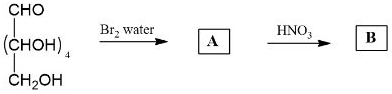
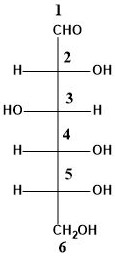
The reaction of glucose with nitric acid will yield

Answer options
Option 2
Correct Answer
Explanation for 2026: 29 May Shift 1 CHE question 1

Q4:

2026: 29 May Shift 1

Biomolecules

Easy

Maltose on hydrolysis gives

Answer options
Option 2
Correct Answer
Explanation for 2026: 29 May Shift 1 CHE question 4

Q6:

2026: 26 May Shift 2

Biomolecules

Medium

Biomolecules

Sugars are the carbohydrates which are sweet in nature and one such example is sucrose. Carbohydrates are classified based on their behavior towards hydrolysis. Carbohydrates can also be classified as reducing or non-reducing sugars based on their behavior towards Fehling's reagent and Tollens' reagent. Monosaccharides can also be classified based on the number of carbon atoms as well as the functional group present in the structure. The two monosaccharides are joined through a special linkage. Carbohydrates are optically active compounds which contain polyhydroxy aldehyde groups or ketones or the compounds which produce such units on hydrolysis.

The number of known monosaccharides that exist in nature are

Answer options
Option 4
Correct Answer
Explanation for 2026: 26 May Shift 2 CHE question 6

Q7:

2026: 26 May Shift 2

Biomolecules

Easy

Biomolecules

Sugars are the carbohydrates which are sweet in nature and one such example is sucrose. Carbohydrates are classified based on their behavior towards hydrolysis. Carbohydrates can also be classified as reducing or non-reducing sugars based on their behavior towards Fehling's reagent and Tollens' reagent. Monosaccharides can also be classified based on the number of carbon atoms as well as the functional group present in the structure. The two monosaccharides are joined through a special linkage. Carbohydrates are optically active compounds which contain polyhydroxy aldehyde groups or ketones or the compounds which produce such units on hydrolysis.

Among the following carbohydrates, the non-reducing sugar is

Answer options
Option 3
Correct Answer
Explanation for 2026: 26 May Shift 2 CHE question 7

Q8:

2026: 26 May Shift 2

Biomolecules

Easy

Biomolecules

Sugars are the carbohydrates which are sweet in nature and one such example is sucrose. Carbohydrates are classified based on their behavior towards hydrolysis. Carbohydrates can also be classified as reducing or non-reducing sugars based on their behavior towards Fehling's reagent and Tollens' reagent. Monosaccharides can also be classified based on the number of carbon atoms as well as the functional group present in the structure. The two monosaccharides are joined through a special linkage. Carbohydrates are optically active compounds which contain polyhydroxy aldehyde groups or ketones or the compounds which produce such units on hydrolysis.

The two monosaccharide units in Lactose are joined by

Answer options
Option 1
Correct Answer
Explanation for 2026: 26 May Shift 2 CHE question 8

Q9:

2026: 26 May Shift 2

Biomolecules

Easy

Biomolecules

Sugars are the carbohydrates which are sweet in nature and one such example is sucrose. Carbohydrates are classified based on their behavior towards hydrolysis. Carbohydrates can also be classified as reducing or non-reducing sugars based on their behavior towards Fehling's reagent and Tollens' reagent. Monosaccharides can also be classified based on the number of carbon atoms as well as the functional group present in the structure. The two monosaccharides are joined through a special linkage. Carbohydrates are optically active compounds which contain polyhydroxy aldehyde groups or ketones or the compounds which produce such units on hydrolysis.

The carbon atoms involved in the glycosidic linkage present in one of the starch components (water-soluble) are

Answer options
Option 2
Correct Answer
Explanation for 2026: 26 May Shift 2 CHE question 9

Q10:

2026: 26 May Shift 2

Biomolecules

Easy

Biomolecules

Sugars are the carbohydrates which are sweet in nature and one such example is sucrose. Carbohydrates are classified based on their behavior towards hydrolysis. Carbohydrates can also be classified as reducing or non-reducing sugars based on their behavior towards Fehling's reagent and Tollens' reagent. Monosaccharides can also be classified based on the number of carbon atoms as well as the functional group present in the structure. The two monosaccharides are joined through a special linkage. Carbohydrates are optically active compounds which contain polyhydroxy aldehyde groups or ketones or the compounds which produce such units on hydrolysis.

The water insoluble component of starch is known as :

Answer options

Q11:

2026: 26 May Shift 1

Biomolecules

Medium

Amino acids are represented by the general structure Figure. Match the side chain 'R' given in List-I with the name of amino acid in List-II

List-IList-II
RAmino acid
(A) Figure(I) Tryptophan
(B) H2N−C∥O−CH2−CH2−\mathrm{H_2N{-}\overset{O}{\overset{\Vert}{C}}{-}CH_2{-}CH_2{-}}(II) Arginine
(C) HN=C(NH2)−NH−(CH2)3−\mathrm{HN{=}C(NH_2){-}NH{-}(CH_2)_3{-}}(III) Asparagine
(D) H2N−C∥O−CH2−\mathrm{H_2N{-}\overset{O}{\overset{\Vert}{C}}{-}CH_2{-}}(IV) Glutamine
Answer options

Q15:

2026: 26 May Shift 1

Biomolecules

Easy

In amylopectin, α-D-glucose units are joined by ________ glycosidic linkage.

Answer options

Q16:

2026: 25 May Shift 2

Biomolecules

Easy

Vitamins and Nucleic Acids

Vitamins are organic compounds required in the diet in small amounts to perform specific biological functions for normal maintenance of optimum growth and health of the organism. Vitamins are designated by alphabets A, B, C, D, etc. Some of them are further named as sub-groups e.g. B1 , B2 , B6 , B12 , etc. Excess of vitamins is also harmful and vitamin pills should not be taken without the advice of doctor. Vitamins are classified into two groups depending upon their solubility in water or fat. Vitamins A, D, E and K are fat and oils soluble. They are stored in liver and adipose tissues. Vitamins B and C groups are soluble in water. Water soluble vitamins must be supplied regularly in diet because they are readily excreted in urine and can not be stored (except vitamin B12B_{12}) in our body. Deficiency of vitamins causes various diseases.

Nucleic acids ( DNA and RNA) are basis of heredity . They are made of four bases, adenine, guanine, cytosine and thymine which combine with sugar molecule beta-D-2-dexoyribse and phosphate group. Base , sugar and phopshate group form nucleotide unit which is building block of DNA molecule. Two nucleic acid chains are wound about each other and held together by hydrogen bonds between pairs of bases . These two strands are complementary to each other because the hydrogen bonds are formed between specifc pairs of bases. Adenine forms hydrogen bonds with thymine where as cytosine forms hydrogen bonds with guanine.

Proteins are the most abundant biomolecules of the living system. Amino acids contain amino group and carboxyl functional group. Depending upon the relative position of amino group with respect to carboxyl group, the amino acids can be classied into alpha, beta and so on. Only alpha amino acids are obtained on hydrolysis of protein. The side chain of amino acid is variable which are non-polar, polar and basic in nature.

Riboflavin is also called

Answer options

Q17:

2026: 25 May Shift 2

Biomolecules

Easy

Vitamins and Nucleic Acids

Vitamins are organic compounds required in the diet in small amounts to perform specific biological functions for normal maintenance of optimum growth and health of the organism. Vitamins are designated by alphabets A, B, C, D, etc. Some of them are further named as sub-groups e.g. B1 , B2 , B6 , B12 , etc. Excess of vitamins is also harmful and vitamin pills should not be taken without the advice of doctor. Vitamins are classified into two groups depending upon their solubility in water or fat. Vitamins A, D, E and K are fat and oils soluble. They are stored in liver and adipose tissues. Vitamins B and C groups are soluble in water. Water soluble vitamins must be supplied regularly in diet because they are readily excreted in urine and can not be stored (except vitamin B12B_{12}) in our body. Deficiency of vitamins causes various diseases.

Nucleic acids ( DNA and RNA) are basis of heredity . They are made of four bases, adenine, guanine, cytosine and thymine which combine with sugar molecule beta-D-2-dexoyribse and phosphate group. Base , sugar and phopshate group form nucleotide unit which is building block of DNA molecule. Two nucleic acid chains are wound about each other and held together by hydrogen bonds between pairs of bases . These two strands are complementary to each other because the hydrogen bonds are formed between specifc pairs of bases. Adenine forms hydrogen bonds with thymine where as cytosine forms hydrogen bonds with guanine.

Proteins are the most abundant biomolecules of the living system. Amino acids contain amino group and carboxyl functional group. Depending upon the relative position of amino group with respect to carboxyl group, the amino acids can be classied into alpha, beta and so on. Only alpha amino acids are obtained on hydrolysis of protein. The side chain of amino acid is variable which are non-polar, polar and basic in nature.

The deficiency of Vitamin C causes

Answer options

Q18:

2026: 25 May Shift 2

Biomolecules

Easy

Vitamins and Nucleic Acids

Vitamins are organic compounds required in the diet in small amounts to perform specific biological functions for normal maintenance of optimum growth and health of the organism. Vitamins are designated by alphabets A, B, C, D, etc. Some of them are further named as sub-groups e.g. B1 , B2 , B6 , B12 , etc. Excess of vitamins is also harmful and vitamin pills should not be taken without the advice of doctor. Vitamins are classified into two groups depending upon their solubility in water or fat. Vitamins A, D, E and K are fat and oils soluble. They are stored in liver and adipose tissues. Vitamins B and C groups are soluble in water. Water soluble vitamins must be supplied regularly in diet because they are readily excreted in urine and can not be stored (except vitamin B12B_{12}) in our body. Deficiency of vitamins causes various diseases.

Nucleic acids ( DNA and RNA) are basis of heredity . They are made of four bases, adenine, guanine, cytosine and thymine which combine with sugar molecule beta-D-2-dexoyribse and phosphate group. Base , sugar and phopshate group form nucleotide unit which is building block of DNA molecule. Two nucleic acid chains are wound about each other and held together by hydrogen bonds between pairs of bases . These two strands are complementary to each other because the hydrogen bonds are formed between specifc pairs of bases. Adenine forms hydrogen bonds with thymine where as cytosine forms hydrogen bonds with guanine.

Proteins are the most abundant biomolecules of the living system. Amino acids contain amino group and carboxyl functional group. Depending upon the relative position of amino group with respect to carboxyl group, the amino acids can be classied into alpha, beta and so on. Only alpha amino acids are obtained on hydrolysis of protein. The side chain of amino acid is variable which are non-polar, polar and basic in nature.

Which amino acids are obtained by hydrolysis of proteins ?

Answer options

Q19:

2026: 25 May Shift 2

Biomolecules

Easy

Vitamins and Nucleic Acids

Vitamins are organic compounds required in the diet in small amounts to perform specific biological functions for normal maintenance of optimum growth and health of the organism. Vitamins are designated by alphabets A, B, C, D, etc. Some of them are further named as sub-groups e.g. B1 , B2 , B6 , B12 , etc. Excess of vitamins is also harmful and vitamin pills should not be taken without the advice of doctor. Vitamins are classified into two groups depending upon their solubility in water or fat. Vitamins A, D, E and K are fat and oils soluble. They are stored in liver and adipose tissues. Vitamins B and C groups are soluble in water. Water soluble vitamins must be supplied regularly in diet because they are readily excreted in urine and can not be stored (except vitamin B12B_{12}) in our body. Deficiency of vitamins causes various diseases.

Nucleic acids ( DNA and RNA) are basis of heredity . They are made of four bases, adenine, guanine, cytosine and thymine which combine with sugar molecule beta-D-2-dexoyribse and phosphate group. Base , sugar and phopshate group form nucleotide unit which is building block of DNA molecule. Two nucleic acid chains are wound about each other and held together by hydrogen bonds between pairs of bases . These two strands are complementary to each other because the hydrogen bonds are formed between specifc pairs of bases. Adenine forms hydrogen bonds with thymine where as cytosine forms hydrogen bonds with guanine.

Proteins are the most abundant biomolecules of the living system. Amino acids contain amino group and carboxyl functional group. Depending upon the relative position of amino group with respect to carboxyl group, the amino acids can be classied into alpha, beta and so on. Only alpha amino acids are obtained on hydrolysis of protein. The side chain of amino acid is variable which are non-polar, polar and basic in nature.

Which vitamin deficiency causes bleeding of gums ?

Answer options

Q20:

2026: 25 May Shift 2

Biomolecules

Easy

Vitamins and Nucleic Acids

Vitamins are organic compounds required in the diet in small amounts to perform specific biological functions for normal maintenance of optimum growth and health of the organism. Vitamins are designated by alphabets A, B, C, D, etc. Some of them are further named as sub-groups e.g. B1 , B2 , B6 , B12 , etc. Excess of vitamins is also harmful and vitamin pills should not be taken without the advice of doctor. Vitamins are classified into two groups depending upon their solubility in water or fat. Vitamins A, D, E and K are fat and oils soluble. They are stored in liver and adipose tissues. Vitamins B and C groups are soluble in water. Water soluble vitamins must be supplied regularly in diet because they are readily excreted in urine and can not be stored (except vitamin B12B_{12}) in our body. Deficiency of vitamins causes various diseases.

Nucleic acids ( DNA and RNA) are basis of heredity . They are made of four bases, adenine, guanine, cytosine and thymine which combine with sugar molecule beta-D-2-dexoyribse and phosphate group. Base , sugar and phopshate group form nucleotide unit which is building block of DNA molecule. Two nucleic acid chains are wound about each other and held together by hydrogen bonds between pairs of bases . These two strands are complementary to each other because the hydrogen bonds are formed between specifc pairs of bases. Adenine forms hydrogen bonds with thymine where as cytosine forms hydrogen bonds with guanine.

Proteins are the most abundant biomolecules of the living system. Amino acids contain amino group and carboxyl functional group. Depending upon the relative position of amino group with respect to carboxyl group, the amino acids can be classied into alpha, beta and so on. Only alpha amino acids are obtained on hydrolysis of protein. The side chain of amino acid is variable which are non-polar, polar and basic in nature.

Consider the double helix structure for DNA. The base pairs are:

Answer options

Q21:

2026: 25 May Shift 1

Biomolecules

Easy

Which disease is caused by deficiency of vitamin E ?

Answer options

Q22:

2026: 25 May Shift 1

Biomolecules

Easy

In the formation of nucleotide which position of sugar moiety is involved in linking phosphoric acid with a nucleoside?

Answer options

Q23:

2026: 25 May Shift 1

Biomolecules

Easy

The glycosidic linkage present in sucrose is between

Answer options

Q24:

2026: 25 May Shift 1

Biomolecules

Easy

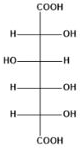
Glucose on oxidation with nitric acid results in formation of one of the following compounds which indicates the presence of a primary alcoholic group Identify the compound.

Answer options

Q25:

2026: 25 May Shift 1

Biomolecules

Easy

Identify the fibrous proteins from the following.

A. Albumins

B. Keratin

C. Insulin

D. Myosin

Answer options

Q27:

2026: 24 May Shift 1

Biomolecules

Easy

Fibrous protein is characterized by the presence of hydrogen and disulfide bonds. Examples of fibrous protein are

(A) Keratin

(B) Myosin

(C) Insulin

(D) Albumins

Answer options

Q30:

2026: 24 May Shift 1

Biomolecules

Medium

Match List-I with List-II

List-IList-II
(Name of the Compounds)(Chemical Structures)
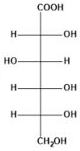
(A) Gluconic acid(I) Figure
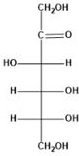
(B) Fructose(II) Figure
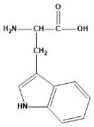
(C) Tryptophan(III) Figure
(D) Saccharic acid(IV) Figure
Answer options