Q1:
2026: 25 May Shift 2
Physics
Dual Nature of Radiation & Matter
Easy
Identify the correct statement among the following;
Correct Answer
Option 4
Correct Answer

2026: 25 May Shift 2
Physics
Dual Nature of Radiation & Matter
Easy
Identify the correct statement among the following;
2026: 25 May Shift 2
Physics
Dual Nature of Radiation & Matter
Easy
The incident photons in a photo-electric effect experiment have wavelength of m. The energy of the photon will be:
(Given: h = Js )
2026: 25 May Shift 2
Physics
Dual Nature of Radiation & Matter
Medium
The following particles have the same kinetic energy. Arrange them in the ascending order of their de-Borglie wavlengths.
(A) Proton
(B) Neutron
(C) -particle
(D) -particle
2026: 25 May Shift 1
Physics
Dual Nature of Radiation & Matter
Medium
Identify the correct statements in the context of a photoelectric effect experiment with following parameters: work function of the metal = 1.8 eV and wavelength of incident radiation 400 nm .
A. Maximum kinetic energy of emitted electrons is ~1.3 eV
B. Stopping potential is V
C. The cut-off frequency is ~ Hz
D. The cut-off frequency is ~ Hz
2026: 25 May Shift 1
Physics
Dual Nature of Radiation & Matter
Easy
A monochromatic light of frequency Hz is emitted by a source of power W. The number of photons per second, on average, emitted by the source will be:
(Take J s)
2026: 25 May Shift 1
Physics
Dual Nature of Radiation & Matter
Easy
Which of the following is not true about the stopping potential in the photoelectric effect experiment?
2026: 24 May Shift 1
Physics
Dual Nature of Radiation & Matter
Easy
Choose the correct statements among the following about the photoelectric effect.
(A) For a given photosensitive material and frequency of incident radiation above the threshold frequency, the photoelectric current increases linearly with the increase in intensity of incident light.
(B) Magnitude of stopping potential increases with the increase in the frequency of incident radiation above the threshold frequency,.
(C) Both photoelectric current and magnitude of stopping potential increase with the increase in intensity of incident light.
(D) There is no apparent time lag between the incidence of light and ejection of electrons from the photosensitive material.
2026: 24 May Shift 1
Physics
Dual Nature of Radiation & Matter
Medium
Light from a source of power 100 mW and wavelength 500 nm is incident on a photosensitive metal connected to a circuit. If every photon ejects 1 electron from the photosensitive metal, then, the photocurrent in the circuit will be
2026: 24 May Shift 1
Physics
Dual Nature of Radiation & Matter
Medium
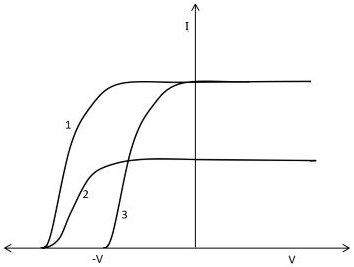
In the context of photoelectric effect , three curves (labelled 1, 2 and 3) as shown in figure, represent the variation of photocurrent (I) and collector plate potential (V) for two different materials using different intensities of a monochromatic light. Which of the following curves represent the same material?
2026: 22 May Shift 2
Physics
Dual Nature of Radiation & Matter
Medium
Arrange the following particles in ascending order of de Broglie wavelength associated with them:
(A) an electron with speed m/s.
(B) a proton with speed of m/s
(C) a cricket ball of mass 200 g with speed of m/s.
(D) a alpha particle with speed of m/s
2026: 22 May Shift 2
Physics
Dual Nature of Radiation & Matter
Easy
Which one of the following is correct?
2026: 22 May Shift 2
Physics
Dual Nature of Radiation & Matter
Medium
The de Broglie wavelength associated with a particle A moving with kinetic energy K, is . The de Broglie wavelength associated with another particle of mass half that of particle A and moving with kinetic energy 4 K will be:
2026: 22 May Shift 2
Physics
Dual Nature of Radiation & Matter
Easy
A light of wavelength = 400 nm illuminates a photosensitive surface of work function 1.4 eV. What is the maximum kinetic energy of the emitted photoelectrons?
2026: 22 May Shift 1
Physics
Dual Nature of Radiation & Matter
Easy
A particle at rest is dropped from a height H. The de-Broglie wavelength of the particle as a function of height is proportional to
2026: 22 May Shift 1
Physics
Dual Nature of Radiation & Matter
Medium
Photo-electrons are emitted from a metal surface when it is illuminated with UV light of wavelength 330 nm. The minimum amount of energy required to emit the electrons from the surface is J. The kinetic energy of the photo electron is
2026: 22 May Shift 1
Physics
Dual Nature of Radiation & Matter
Medium
Read the following statements about the photoelectric effect and choose the correct statement only.
(A) A light of wavelength above a threshold cannot eject the electron from a photosensitive metal.
(B) Maximum kinetic energy of the emitted photoelectrons is determined by the energy of each photon and the work function of the photosensitive metal.
(C) There is no apparent time lag between the incidence of light and ejection of electrons from the photosensitive material.
(D) On increasing the intensity of incident light, keeping the frequency constant, saturation current increases but the cut-off potential remains unchanged.
2026: 21 May Shift 2
Physics
Dual Nature of Radiation & Matter
Medium
The energy that should be added to an electron to reduce its de-Broglie wavelength from 1 nm to 0.5 nm is:
2026: 21 May Shift 2
Physics
Dual Nature of Radiation & Matter
Easy
If the momentum of a particle is doubled , then its de-Broglie wavelength will:
2026: 21 May Shift 2
Physics
Dual Nature of Radiation & Matter
Medium
Match List-I with List-II in the context of the phenomenon of photoelectric effect. Frequency of incident radiation = and threshold freuency =
| LIST-I | LIST-II | ||
|---|---|---|---|
| A. | Maximum kinetic energy of photoelectrons | I. | Zero |
| B. | Photoelectric current for | II. | proportional to |
| C. | Momentum of a photon | III. | depends linearly on |
| D. | Photoelectric current for | IV. | proportional to intensity of incident radiation |
2026: 21 May Shift 1
Physics
Dual Nature of Radiation & Matter
Easy
A monochromatic beam of light of frequency Hz is produced by a laser source. What will be the energy of a photon in the light beam ?
2026: 21 May Shift 1
Physics
Dual Nature of Radiation & Matter
Easy
Photoelectric effect is the phenomenon of
2026: 21 May Shift 1
Physics
Dual Nature of Radiation & Matter
Easy
The maximum kinetic energy of photo-electrons in the photoelectric effect experiment,
2026: 20 May Shift 2
Physics
Dual Nature of Radiation & Matter
Medium
A proton is accelerated by a potential difference of V Volt. Its de Broglie wavelength is . If an alpha particle is accelerated by a potential difference of 2 V Volt, then de Broglie wavelength of the alpha particle will be
2026: 20 May Shift 2
Physics
Dual Nature of Radiation & Matter
Easy
Arrange the following in a sequential order for the experimental study of photoelectric effect:
A. Emission of electrons from the plate takes place.
B. Monochromatic light of sufficiently short wavelength is incident on the plate.
C. A photosensitive plate is selected.
D. Electrons move towards the collector plate at positive potential.
2026: 20 May Shift 2
Physics
Dual Nature of Radiation & Matter
Easy
In the wave picture of light, the intensity of light is determined by the square of the amplitude of the wave. What determines the intensity of light in the photon picture of light for a given frequency?
2026: 20 May Shift 2
Physics
Dual Nature of Radiation & Matter
Medium
The work function of cesium(Cs) surface is 2.14 eV. The wavelength of light incident on the surface, if the photocurrent is brought to zero by a stopping potential of 0.50 V is given by:
2026: 20 May Shift 1
Physics
Dual Nature of Radiation & Matter
Medium
Match List-I with List-II
| List-I | List-II |
|---|---|
| (A) Variation of photoelectric current (Y-axis) with intensity (X-axis) of incident radiation. | (I)  |
| (B) Variation of stopping potential (Y-axis) with frequency (X-axis) of incident radiation. | (II) 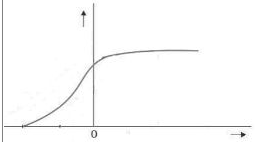 |
| (C) Variation of photoelectric current (Y-axis) with anode potential (X-axis). | (III) 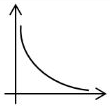 |
| (D) Variation of de-Broglie wavelength (Y-axis) with its particle momentum (X-axis). | (IV) 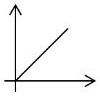 |
2026: 20 May Shift 1
Physics
Dual Nature of Radiation & Matter
Easy
A proton accelerated through a potential difference V has a de-Broglie wavelength . On doubling the potential difference, the de-Broglie wavelength of the proton-
2026: 20 May Shift 1
Physics
Dual Nature of Radiation & Matter
Hard
The surface of a certain metal is first illuminated with light of wavelength, = 350 nm, and then by light of wavelength, = 540 nm. It is found that the maximum speed of the photoelectrons in the two cases differ by a factor of 2. The work function of the metal (in eV ) is close to (Energy of photon = eV)
2026: 19 May Shift 2
Physics
Dual Nature of Radiation & Matter
Easy
Light of wavelength falls on a metal surface which needs minimum energy of 4.2 eV to emit the electrons. Kinetic energy of the fastest electron is