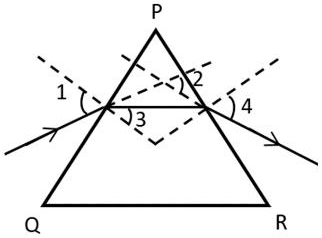
Match List-I with List-II
List-I List-II Optical Instrument Magnifying power (A) Magnifying power m of a simple microscope (I) (B) Magnifying power m of a simple microscope if the image is at infinity (II) (C) Magnifying power of a compound microscope (III) (D) Magnifying power of a telescope (IV)
Match List-I with List-II
| List-I | List-II |
|---|---|
| Optical Instrument | Magnifying power |
| (A) Magnifying power m of a simple microscope | (I) |
| (B) Magnifying power m of a simple microscope if the image is at infinity | (II) |
| (C) Magnifying power of a compound microscope | (III) |
| (D) Magnifying power of a telescope | (IV) |
Solution
✅ Correct Option: 1
| List I | List II |
|---|---|
| (A) Magnifying power of a simple microscope | (I) |
| (B) Simple microscope, image at infinity | (IV) |
| (C) Compound microscope | (II) |
| (D) Telescope | (III) |
The image at the near point gives . The image at infinity gives , because the object then sits at the focus.
A simple way to remember this: the near-point formula is always larger by exactly 1 than the infinity formula.
Related questions:
2026: 25 May Shift 1
2026: 31 May Shift 2
2025: 13 May Shift 1
2026: 31 May Shift 2