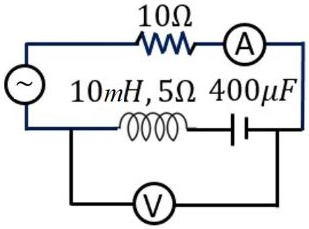
In an a. c. series LCR circuit, the applied voltage is volt. Given that, R = , = and = . The value of power dissipated in the circuit is
In an a. c. series LCR circuit, the applied voltage is volt. Given that, R = , = and = . The value of power dissipated in the circuit is
Solution
✅ Correct Option: 4
Power dissipated is , where the rms voltage is V.
Impedance:
Current: A
Option 3: 100 W comes from wrongly using with a different current or ignoring the power factor ().
The phase angle in the voltage is the source's initial phase, not the phase between voltage and current, so it plays no part in the power.
Related questions:
2025: 2 June Shift 2