
A, B, and C are parallel conductors of equal lengths carrying current , and respectively, as shown in the figure. is the force exerted by B on A and is the force exerted by C on A. Choose the correct answer
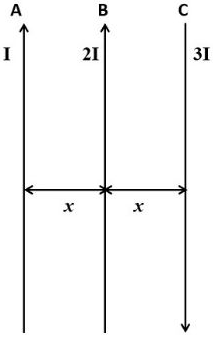
A, B, and C are parallel conductors of equal lengths carrying current , and respectively, as shown in the figure. is the force exerted by B on A and is the force exerted by C on A. Choose the correct answer
Solution
✅ Correct Option: 4
Force per unit length between two parallel wires is . Currents in the same direction attract, and currents in opposite directions repel.
B is at distance from A and carries current in the same direction as A, so is an attraction towards B (to the right):
C is at distance from A and carries current in the opposite direction, so is a repulsion away from C (to the left):
So , which gives
Option 3: it has the correct magnitude ratio but ignores that the forces point in opposite directions.
Related questions:
2025: 29 May Shift 1
2026: 31 May Shift 2