
A photo cathode is illuminated by a very small bright source placed 1 m away. When the same source of light is placed 0.5 m away, the number of electrons emitted by the photo cathode would become
A photo cathode is illuminated by a very small bright source placed 1 m away. When the same source of light is placed 0.5 m away, the number of electrons emitted by the photo cathode would become
Solution
✅ Correct Option: 1
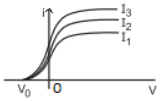
Photoelectric current (number of electrons emitted per second) is proportional to the intensity of light, and intensity from a small source follows the inverse square law, .
The frequency of the light is unchanged, so only the number of emitted electrons changes, not their maximum kinetic energy.
Related questions:
2026: 26 May Shift 2
2026: 21 May Shift 2
2026: 29 May Shift 2