Q1:
Fine Arts
Modern Indian Art
Medium
What was the title of the exhibition held in Delhi in 1981 which showcased the works of eminent artists?
Correct Answer
Option 1
Correct Answer

Fine Arts
Modern Indian Art
Medium
What was the title of the exhibition held in Delhi in 1981 which showcased the works of eminent artists?
Fine Arts
Rajasthani School
Medium
Who painted Krishna Swinging and Radha in Sad Mood from Bikaner School of Art?
Fine Arts
Bengal School
Easy
Who among the following artist painted the Haripura posters?
Fine Arts
Bengal School
Medium
Arrange the following individuals in chronological order according to their birth.
(A) Abdul Rehman Chughtai
(B) Abanindranath Tagore
(C) E. B. Havell
(D) Kshitindranath Majumdar
Fine Arts
Modern Indian Art
Easy
G. R. Santosh portrayed the cosmic union of human energy in his painting with tantric philosophy reminds of:
Fine Arts
Mughal School
Easy
Who were the two master artists that came to India, after Humayun regained power?
Fine Arts
Mughal School
Medium
The artworks produced under the supervision of Shah Jahan concentrated more on:
Fine Arts
Bengal School
Easy
Which technique did Abdul Rehman Chughtai use in his works?
Fine Arts
Bengal School
Easy
For what purpose did the British Colonial officers commissioned local artists to paint scenes around them?
Fine Arts
Modern Indian Art
Easy
Which among the following were the themes of paintings made by Raja Ravi Varma?
Fine Arts
Bengal School
Easy
Which of the following styles of art were a source of inspiration to Abanindranath Tagore and E.B. Havell?
Fine Arts
Modern Indian Art
Easy
Which of the following artist belongs to the Neo-tantric art movement?
Fine Arts
Rajasthani School
Medium
The practice of Pala art was spread to which of the following places?
(A) Nepal
(B) Afghanistan
(C) Java
(D) Sri Lanka
Fine Arts
Mughal School
Easy
Match the following pigments (List-I) with their sources, (List-II) in Mughal school
| List-I | List-II |
|---|---|
| (Pigments) | (Source) |
| (A) Ultramarine | (I) Cinnabar |
| (B) Bright yellow | (II) Orpiment |
| (C) Vermilion | (III) Lapiz Lazuli |
| (D) Lampblack | (IV) Charcoal |
Fine Arts
Modern Indian Art
Easy
Match List-I with List-II
| List-I | List-II |
|---|---|
| (School/ Artists' Group) | (Artist associated) |
| (A) Bengal School | (I) J. Swaminathan |
| (B) Baroda Art School | (II) K.G. Subramanyan |
| (C) Calcutta Group | (III) Nandalal Bose |
| (D) Group 1890 | (IV) Prodosh Das Gupta |
Fine Arts
Pahari School
Medium
Under whose patronage the first phase of Guler painting began?
Fine Arts
Pahari School
Medium
Which of the following series was painted by Manaku in 1730 at Guler?
Fine Arts
Bengal School
Medium
Who among the following was the founder of the Indian Society of Oriental Art?
Fine Arts
Modern Indian Art
Medium
Which among the following subject/objects are portrayed by K. C. S. Paniker in his paintings?
Fine Arts
Rajasthani School
Medium
Identify the Nayikas considered according to the physiognomic traits of appearance.
(A) Padmini
(B) Vasakasajja
(C) Chitrini
(D) Shankhini
Fine Arts
Bengal School
Easy
Who founded Bengal School of painting style?
Fine Arts
Deccani School
Easy
Match List-I with List-II
| List-I | List-II |
|---|---|
| (Manuscript) | (School of Painting) |
| (A) Nujum al-Ulum | (I) Mughal School of Painting |
| (B) Astasahasrika Prajnaparamita | (II) Rajasthani School of Painting |
| (C) Hamzanama | (III) Deccani School of Painting |
| (D) Rasikapriya | (IV) Pala School of Painting |
Fine Arts
Mughal School
Easy
Choose the Persian Artists of the Mughal court.
(A) Mir Sayyid Ali
(B) Bihzad
(C) Sahibdin
(D) Abd Us Samad
Fine Arts
Rajasthani School
Hard
Arrange the following rulers in chronological order according to their period of rule
(A) Sawai Ishwari Singh
(B) Raja Bharmal
(C) Madho Singh
(D) Aniruddha Singh
Fine Arts
Pahari School
Easy
Raja Balwant Singh patronized the art of which of the following artist?
Fine Arts
Mughal School
Medium
Arrange the following processes in sequence, adopted for book painting during Mughal period.
(A) Making the composition.
(B) The pages were ruled and filled with text.
(C) Cut to suit the size of the manuscript.
(D) Sheets of handmade paper were prepared.
Fine Arts
Modern Indian Art
Medium
Match List-I with List-II
| List-I | List-II |
|---|---|
| (Group/Institution) | (Foundation Year) |
| (A) Calcutta Group | (I) Late 1950s |
| (B) The Progressive Artists' Group | (II) 1963 |
| (C) Group 1890 | (III) 1946 |
| (D) Baroda Art School | (IV) 1943 |
Fine Arts
Rajasthani School
Hard
Arrange the following manuscripts in chronological order of their creation.
(A) Rasikapriya
(B) Jagat Singh Ramayana
(C) Bundi Ragamala
(D) Bal Kanda of Ramayana
Fine Arts
Mughal School
Easy
Arrange the following emperors in chronological order.
(A) Dara Shikoh
(B) Akbar
(C) Prince Khurram
(D) Jahangir
Fine Arts
Modern Indian Art
Hard
What is the title of the mural done on the outer wall of the Kala Bhavana, Shantiniketan?
Fine Arts
Rajasthani School
Medium
Which among the followings manuscripts belongs to the Pala School of Painting?
(A) Prajnaparamita
(B) Astasahasrika
(C) Ragamala
(D) Kalakacharyakatha
Fine Arts
Mughal School
Medium
In which museum, the artwork 'Babur Inspecting the Fort of Gwalior' made by Bhure is currently housed?
Fine Arts
Modern Indian Art
Easy
Under whose leadership was the Group 1890 formed?
Fine Arts
Pahari School
Easy
Whose life scenes are illustrated in the Bhagvata Purana?
Fine Arts
Modern Indian Art
Medium
Match List-I with List-II
| List-I | List-II |
|---|---|
| (Artist) | (Painting) |
| (A) G. M. Sheikh | (I) Janata Watch Repairing |
| (B) Bhupen Khakhar | (II) City for Sale |
| (C) K. C. S. Paniker | (III) Children |
| (D) Somnath Hore | (IV) The Dog |
Fine Arts
Pahari School
Medium
The Basohli style of art was completely transformed into the Guler-Kangra phase during which of the following period?
Fine Arts
Deccani School
Easy
The painting Yogini belongs to which of the following school of miniature painting?
Fine Arts
Pahari School
Easy
Which among the following are the characteristics of the Basohli School of Painting?
Fine Arts
Deccani School
Medium
Select the unique features among the following used in Yogini, a painting from Deccani School?
(A) The Yogini is standing in a balcony
(B) The Yogini is adorned with jewellery
(C) The Yogini is preoccupied with a falcon
(D) Her hair bun elongates her visual presence
Fine Arts
Modern Indian Art
Medium
Which of the following medium is used by Atul Dodiya in his work Bapu?
Fine Arts
Modern Indian Art
Easy
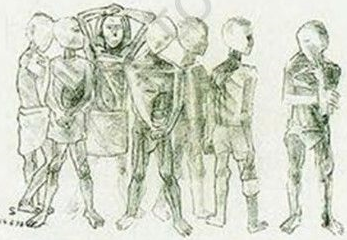
Observe the image below and answer the following questions
Fine Arts
Modern Indian Art
Medium
Observe the image below and answer the following questions
Fine Arts
Modern Indian Art
Easy
Observe the image below and answer the following questions
Fine Arts
Modern Indian Art
Hard
Observe the image below and answer the following questions
Fine Arts
Modern Indian Art
Medium
Observe the image below and answer the following questions
Fine Arts
Pahari School
Medium
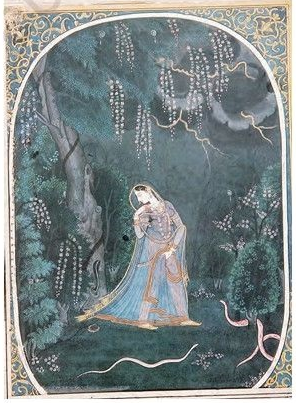
Observe the image below and answer the following questions
Fine Arts
Pahari School
Hard
Observe the image below and answer the following questions
Fine Arts
Pahari School
Easy
Observe the image below and answer the following questions
Fine Arts
Pahari School
Hard
Observe the image below and answer the following questions
Fine Arts
Pahari School
Easy
Observe the image below and answer the following questions
Every question from the CUET Fine Arts 2025 20 May Shift 1 paper is here in full, with the correct answer and a step by step solution for each one. It is completely free, there is no login and no paywall, and you can read the whole paper online or download it to revise offline.
You can also attempt it instead of only reading it. Take the paper as a full length mock under exam conditions, or filter it by topic and attempt just that topic as a topic test. Both are free, and you get a breakdown of your accuracy, your timing and your weak areas once you submit.
CUET Fine Arts past year questions (PYQs) are the closest thing to the real exam, so working through them is the quickest way to learn the paper pattern, the marking scheme and the level of difficulty to expect on the day.