CUET Political Science: Contemporary World PoliticsEnvironment & Resources. Free, no login required.

Q1:

2025: 19 May Shift 1

Environment & Resources

Medium

'States shall cooperate in the spirit of global partnership to conserve, protect and restore the health and integrity of the Earth's ecosystem'. In which of the following conferences was this statement made?

Answer options
Option 1
Correct Answer
Explanation for 2025: 19 May Shift 1 POL question 1

Q2:

2025: 16 May Shift 1

Environment & Resources

Easy

UNEP Stands for:

Answer options
Option 2
Correct Answer
Explanation for 2025: 16 May Shift 1 POL question 2

Q4:

2025: 16 May Shift 1

Environment & Resources

Easy

The 1992 UNFCCC provides that the parties should act to protect the climate system “on the basis of equity and in accordance with their common but differentiated responsibilities and respective capabilities.”The parties to the Convention agreed that the largest share of historical and current global emissions of greenhouse gases has originated in developed countries. It was also acknowledged that per capita emissions in developing countries are still relatively low. China, India, and other developing countries were, therefore, exempted from the requirements of the Kyoto Protocol. The Kyoto Protocol is an international agreement setting targets for industrialised countries to cut their greenhouse gas emissions. Certain gases like carbon dioxide, methane, hydro-fluoro carbons etc. are considered at least partly responsible for global warming - the rise in global temperature which may have catastrophic consequences for life on Earth. The protocol was agreed to in 1997 in Kyoto in Japan, based on principles set out in UNFCCC.

What is the full form of the UNFCCC?

Answer options
Option 3
Correct Answer
Explanation for 2025: 16 May Shift 1 POL question 4

Q5:

2025: 16 May Shift 1

Environment & Resources

Easy

The 1992 UNFCCC provides that the parties should act to protect the climate system “on the basis of equity and in accordance with their common but differentiated responsibilities and respective capabilities.”The parties to the Convention agreed that the largest share of historical and current global emissions of greenhouse gases has originated in developed countries. It was also acknowledged that per capita emissions in developing countries are still relatively low. China, India, and other developing countries were, therefore, exempted from the requirements of the Kyoto Protocol. The Kyoto Protocol is an international agreement setting targets for industrialised countries to cut their greenhouse gas emissions. Certain gases like carbon dioxide, methane, hydro-fluoro carbons etc. are considered at least partly responsible for global warming - the rise in global temperature which may have catastrophic consequences for life on Earth. The protocol was agreed to in 1997 in Kyoto in Japan, based on principles set out in UNFCCC.

The UNFCCC decided the parties should act to protect the climate system on the basis of:

Answer options
Option 3
Correct Answer
Explanation for 2025: 16 May Shift 1 POL question 5

Q6:

2025: 16 May Shift 1

Environment & Resources

Easy

The 1992 UNFCCC provides that the parties should act to protect the climate system “on the basis of equity and in accordance with their common but differentiated responsibilities and respective capabilities.”The parties to the Convention agreed that the largest share of historical and current global emissions of greenhouse gases has originated in developed countries. It was also acknowledged that per capita emissions in developing countries are still relatively low. China, India, and other developing countries were, therefore, exempted from the requirements of the Kyoto Protocol. The Kyoto Protocol is an international agreement setting targets for industrialised countries to cut their greenhouse gas emissions. Certain gases like carbon dioxide, methane, hydro-fluoro carbons etc. are considered at least partly responsible for global warming - the rise in global temperature which may have catastrophic consequences for life on Earth. The protocol was agreed to in 1997 in Kyoto in Japan, based on principles set out in UNFCCC.

What was the objective of Kyoto Protocol?

Answer options
Option 1
Correct Answer
Explanation for 2025: 16 May Shift 1 POL question 6

Q7:

2025: 16 May Shift 1

Environment & Resources

Easy

The 1992 UNFCCC provides that the parties should act to protect the climate system “on the basis of equity and in accordance with their common but differentiated responsibilities and respective capabilities.”The parties to the Convention agreed that the largest share of historical and current global emissions of greenhouse gases has originated in developed countries. It was also acknowledged that per capita emissions in developing countries are still relatively low. China, India, and other developing countries were, therefore, exempted from the requirements of the Kyoto Protocol. The Kyoto Protocol is an international agreement setting targets for industrialised countries to cut their greenhouse gas emissions. Certain gases like carbon dioxide, methane, hydro-fluoro carbons etc. are considered at least partly responsible for global warming - the rise in global temperature which may have catastrophic consequences for life on Earth. The protocol was agreed to in 1997 in Kyoto in Japan, based on principles set out in UNFCCC.

Which of the following is true about global warming ?

Answer options
Option 2
Correct Answer
Explanation for 2025: 16 May Shift 1 POL question 7

Q8:

2025: 16 May Shift 1

Environment & Resources

Easy

The 1992 UNFCCC provides that the parties should act to protect the climate system “on the basis of equity and in accordance with their common but differentiated responsibilities and respective capabilities.”The parties to the Convention agreed that the largest share of historical and current global emissions of greenhouse gases has originated in developed countries. It was also acknowledged that per capita emissions in developing countries are still relatively low. China, India, and other developing countries were, therefore, exempted from the requirements of the Kyoto Protocol. The Kyoto Protocol is an international agreement setting targets for industrialised countries to cut their greenhouse gas emissions. Certain gases like carbon dioxide, methane, hydro-fluoro carbons etc. are considered at least partly responsible for global warming - the rise in global temperature which may have catastrophic consequences for life on Earth. The protocol was agreed to in 1997 in Kyoto in Japan, based on principles set out in UNFCCC.

Which of the following is the correct measure to contain global warming?

Answer options
Option 1
Correct Answer
Explanation for 2025: 16 May Shift 1 POL question 8

Q9:

2025: 15 May Shift 2

Environment & Resources

Easy

The United Nations Conference on Environment and Development was held in June 1992. This was also called the Earth Summit. In which city was it organized ?

Answer options
Option 4
Correct Answer
Explanation for 2025: 15 May Shift 2 POL question 9

Q10:

2025: 15 May Shift 2

Environment & Resources

Easy

In 1972, a global think tank published a book that cautioned about the potential depletion of the Earth's resources against the backdrop of a rapidly growing world population. What is the name of the think tank and the title of the book?

Answer options

Q11:

2025: 14 May Shift 2

Environment & Resources

Easy

The 1992 United Nations Framework Convention on Climate Change (UNFCCC) provides that the parties should act to protect the climate system on the __________.

Answer options

Q13:

2025: 14 May Shift 2

Environment & Resources

Medium

In which of the following declarations the principle of 'common but differentiated responsibilities' has been adopted?

Answer options

Q14:

2025: 14 May Shift 2

Environment & Resources

Easy

The approach to development that combines economic growth with ecological responsibility is called-

Answer options

Q15:

2025: 14 May Shift 2

Environment & Resources

Easy

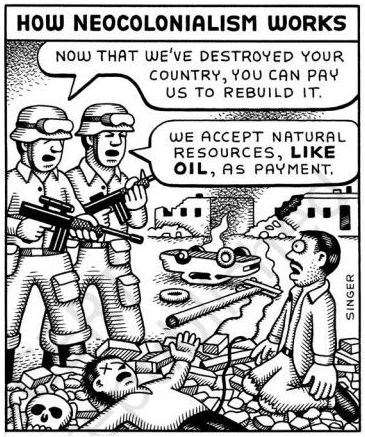
Study the picture carefully and answer the questions that follow:

Picture interpretation:

Figure

What message does the picture depict?

Answer options

Q16:

2025: 14 May Shift 2

Environment & Resources

Easy

Study the picture carefully and answer the questions that follow:

Picture interpretation:

Figure

The immense wealth associated with this resource generates political struggles to control it. Identify the resource

Answer options

Q17:

2025: 14 May Shift 2

Environment & Resources

Easy

Study the picture carefully and answer the questions that follow:

Picture interpretation:

Figure

Powerful countries want to control the resources of the smaller countries because:

Answer options

Q18:

2025: 14 May Shift 2

Environment & Resources

Easy

Study the picture carefully and answer the questions that follow:

Picture interpretation:

Figure

With reference to the picture, how can a country be destroyed by a powerful country and be rebuild by the same powerful country?

Answer options

Q19:

2025: 14 May Shift 2

Environment & Resources

Medium

Study the picture carefully and answer the questions that follow:

Picture interpretation:

Figure

Throughout the Cold War, the industrialized countries of the North adopted a number of methods to ensure a steady flow of resources. Identify the method they did not adopt.

Answer options

Q20:

2025: 13 May Shift 1

Environment & Resources

Medium

Match List-I with List-II

List-IList-II
(A) Brundtland Report(I) 1992
(B) Antarctic Treaty(II) 1991
(C) Antarctic Environmental Protocol(III) 1959
(D) Earth summit in Rio de Janeiro(IV) 1987
Answer options

Q21:

2025: 13 May Shift 1

Environment & Resources

Easy

Limits to Growth focuses on which of the following Environmental Concerns?

Answer options

Q22:

2025: 13 May Shift 1

Environment & Resources

Easy

Which of the following regions are subject to special regional rules of Environmental Protection?

Answer options